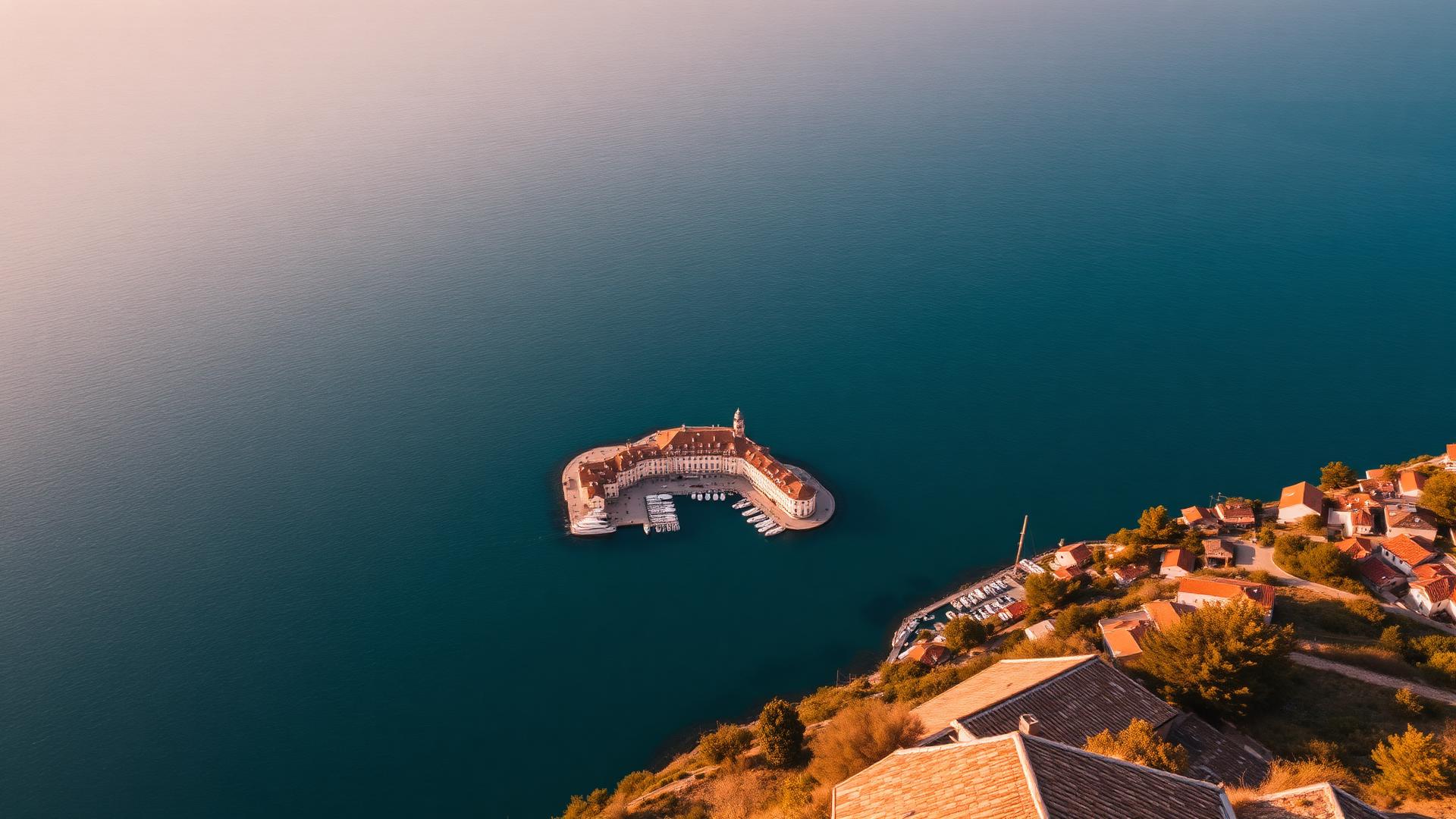
Vis is the island Croatia kept to itself. As a Yugoslav military base, it was closed to foreign visitors until 1989 — no development boom, no resort sprawl, no cruise crowds. What survived is the Adriatic as it used to be: two stone harbor towns, vineyards running down to the sea, coves you can only reach by boat, and some of the clearest water in the Mediterranean.
I'm Heni, a luxury travel advisor specializing in private Croatian sailings through Via Croatia. Vis is the anchor of nearly every Adriatic itinerary I design — and it's an island that rewards travelers who arrive the right way.
Why Vis Is Best Experienced by Private Boat
Vis is the farthest inhabited island from the Croatian mainland — about two and a half hours by ferry from Split, with limited crossings. That distance is exactly what kept it unspoiled, and it's why a private yacht changes everything. The island's best moments — the Blue Cave at opening light, Stiniva Cove before the day-trippers, a swim stop in a bay with no name — belong to travelers with their own boat, captain, and schedule. On a Via Croatia private sailing, Vis isn't a rushed day trip; it's your base for two or three unhurried days.
The Two Towns
Vis Town
Wrapped around a deep natural harbor on the island's northeast side, Vis Town is one of Europe's oldest settlements — founded by the Greeks as Issa in the 4th century BC. Today it's a string of Renaissance stone houses, palm-lined promenades, and family konobas. Wander the Kut quarter at dusk, when the stone glows gold.
Komiža
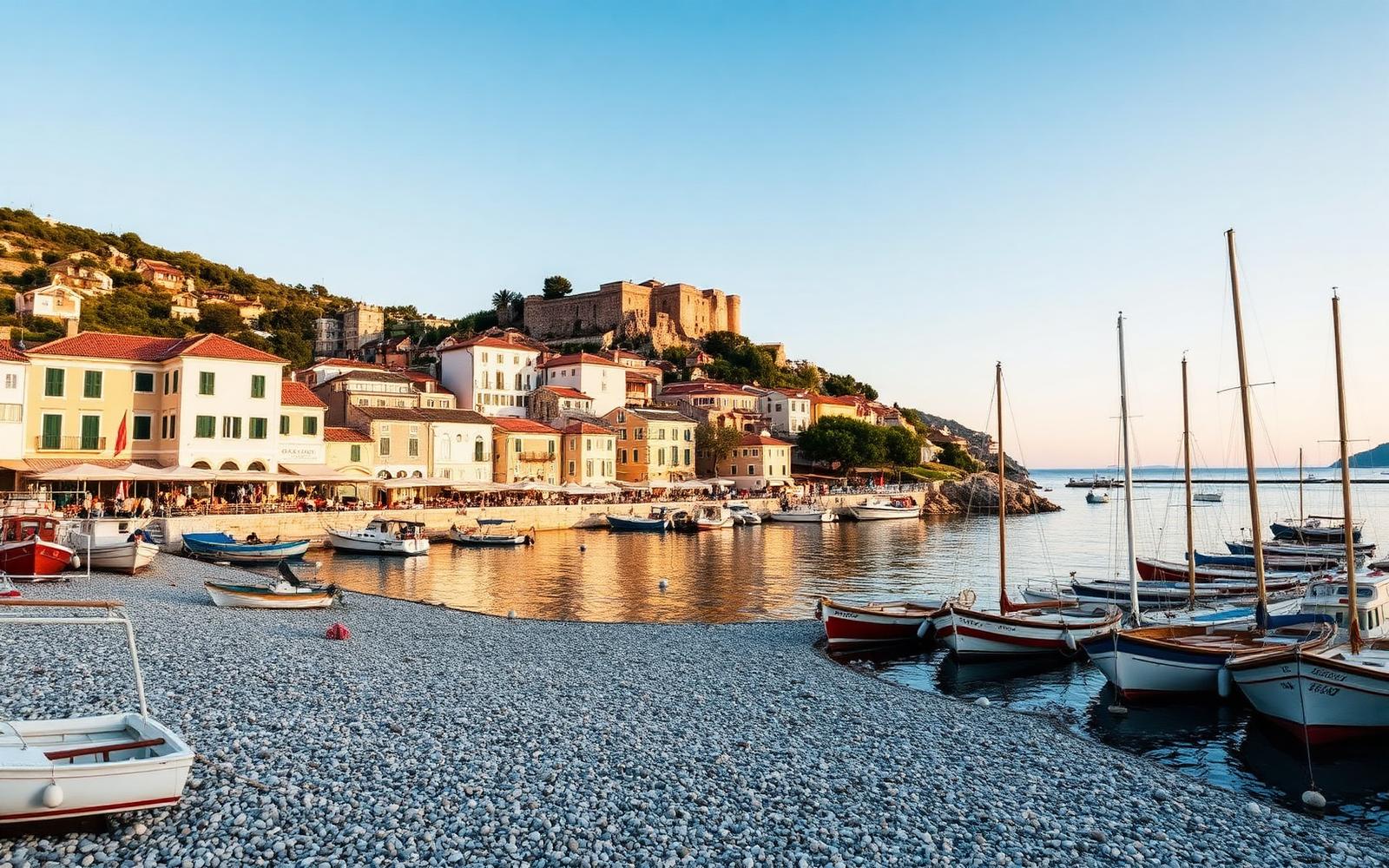
On the western shore, Komiža is a fishing village that looks like it hasn't noticed the last century: narrow lanes, a pebble harbor full of wooden boats, and Fort George standing guard above. This is the departure point for the Blue Cave and the island of Biševo.
What to Do on and Around Vis
The Blue Cave (Biševo)
The Adriatic's most famous natural wonder sits on the islet of Biševo, a short sail from Komiža. Around late morning, sunlight refracts through an underwater opening and fills the cave with an electric silver-blue glow. The light show peaks roughly between 11 a.m. and 1 p.m. — and so do the tour boats. With a private captain you arrive as it opens, ahead of the queues.
Stiniva Cove
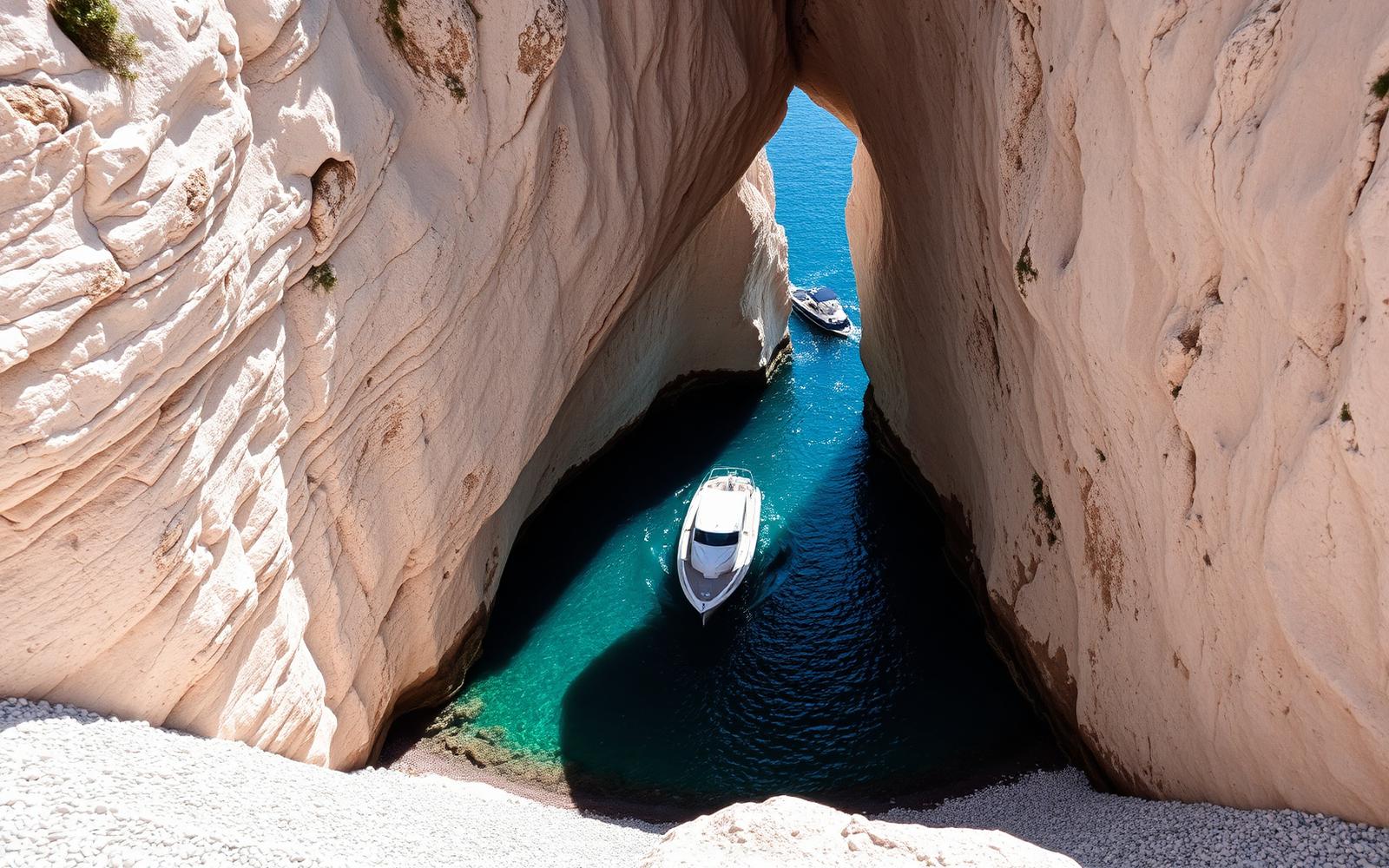
A beach voted among the best in Europe: a narrow cleft in the cliffs opens into an amphitheater of white pebbles and turquoise water. On land it's a steep scramble; by sea, your tender simply glides through the rock gates. There is no more persuasive argument for arriving by boat.
The Green Cave and the Southern Coves
On the islet of Ravnik, the Green Cave offers a wilder, quieter counterpart to Biševo — you can swim inside it. The southern coast of Vis is stitched with anchorages like Srebrna's silver pebbles, ideal for a long lunch on deck.
The Military Island
Vis spent decades as a fortress, and its relics are now its most unusual attractions: Tito's wartime cave headquarters, abandoned tunnels and gun emplacements, and Fort George, built by the British in 1813 and now an atmospheric events venue. A private island tour with a local guide turns the island's secret history into the best story of your trip.
Mount Hum
The island's highest point, with a view that takes in Biševo, the open Adriatic, and on clear days the Italian horizon. Go at sunset.
Wine: Vugava and the Vineyards of Vis
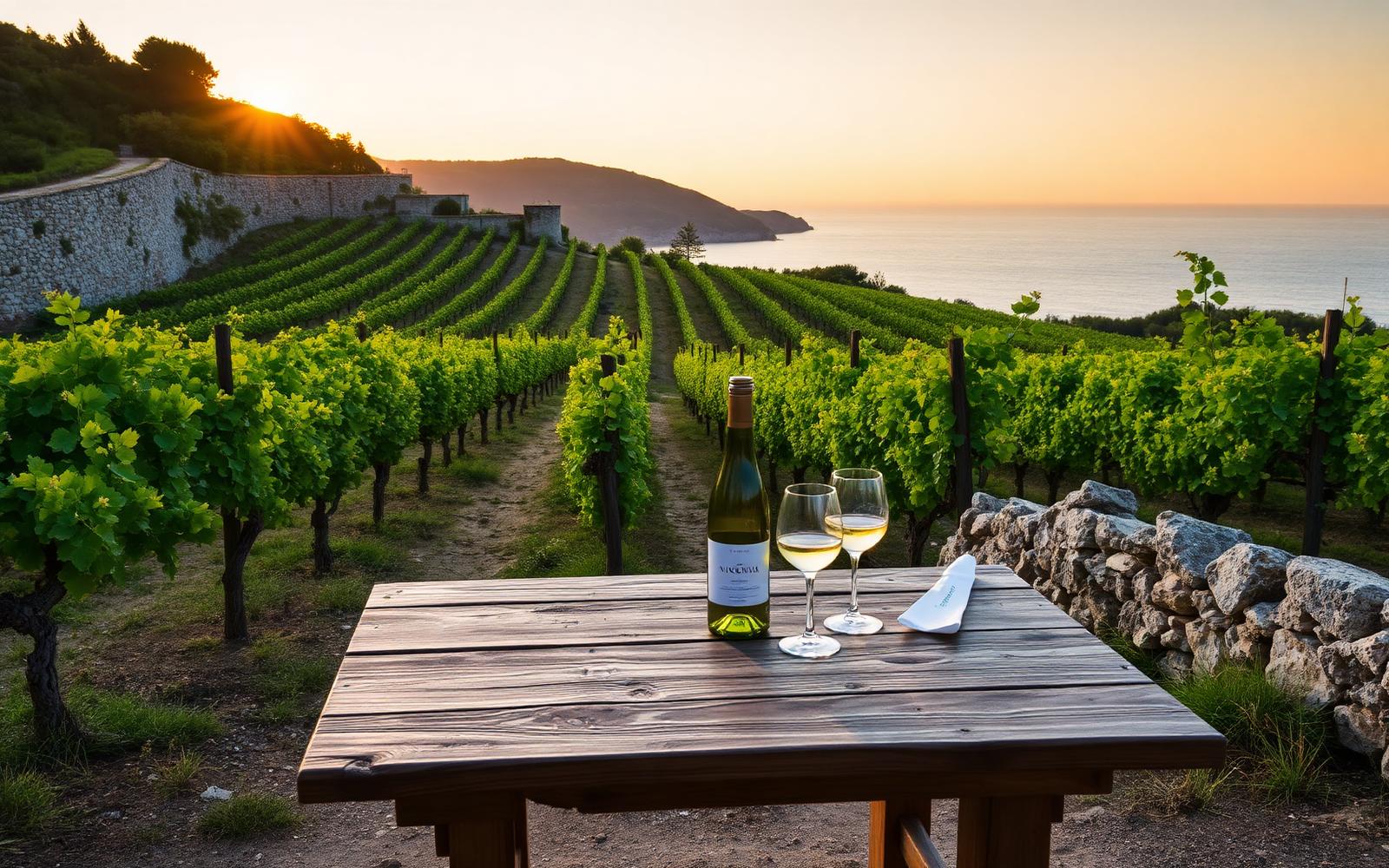
Vis grows something you'll struggle to find anywhere else on earth: Vugava, an ancient white grape cultivated on this island for more than two thousand years — honeyed, mineral, made for seafood. Family cellars around the island pour it alongside Plavac Mali reds; one local winemaker even ages his bottles inside a former army tunnel. A private tasting at a family vineyard, arranged around your sailing schedule, is a highlight I build into nearly every Vis itinerary.
Where to Eat
Vis dining is konoba culture — family taverns where the day's catch decides the menu. In the island's interior, order peka (lamb or octopus slow-cooked under an iron bell) a day ahead at a rural konoba like Roki's, surrounded by the family's own vineyards. In Komiža, lobster comes straight from the tanks at a waterside institution built over an old lobster house. In Vis Town, the Kut quarter hides courtyard restaurants that reward slow evenings. Your captain and I coordinate the reservations; on Vis, the good tables are always spoken for.
A Perfect Two Days on Vis (By Private Yacht)
Day one: sail into Komiža mid-morning, coffee on the riva, then a skippered run to Biševo for the Blue Cave ahead of the crowds, a swim at the Green Cave, and lunch on deck in a southern cove. Evening: sunset from Fort George, dinner over the water in Komiža.
Day two: morning anchor at Stiniva before the day boats arrive, then around to Vis Town. Afternoon military-history tour and a Vugava tasting at a family cellar; peka dinner at an inland konoba under the vines.
When to Go
Late May through June and September into early October are ideal: warm seas, open konobas, and empty coves. July and August bring the Adriatic's best sailing weather along with its biggest crowds — on Vis they're gentler than on Hvar, but early anchoring still matters. This is also a filming location of Mamma Mia! Here We Go Again — summer visitors will recognize the scenery instantly.
FAQ
How do you get to Vis Island?
By ferry or catamaran from Split (about 2.5 hours), or — the way I recommend — by private yacht as part of a Croatia sailing itinerary, which turns the crossing itself into one of the best days of the trip.
How many days do you need on Vis?
Two to three days by boat lets you see the Blue Cave, Stiniva, both towns, and the vineyards without rushing. As a day trip from Split or Hvar, you'll see one highlight in a queue.
Is the Blue Cave worth it?
Yes — if you time it right. The glow peaks late morning; a private boat gets you there at opening, ahead of the tour groups.
Is Vis good for couples or families?
Both. Couples come for the seclusion and the wine; families love the swimming coves, the boat days, and the military tunnels. I design private sailings around both.